Working out how to read more books is rarely about wanting it enough. You want to read more books. You buy them, you stack them, and you tell yourself this weekend will be different. Then the weekend comes and goes, and not one page gets turned. I know that loop well, because I lived in it for years.
If it helps, you are not unusual. Pew Research Center found that around a quarter of American adults had not read a book, in whole or in part, in the past year. The gap between people who buy books and people who finish them is enormous, and closing it has almost nothing to do with discipline.
Two Januaries ago, I set a goal. Forty books for the year, one a week with room to spare. By December I had finished six, and eleven more sat half read on my nightstand. The problem was never time. It was the goal itself.
The next year, I dropped the number completely. No target, no tracker, nothing to fail at. And somehow I read more books than I had the year I was actually trying to hit one. That shift is what this post is about.
TL;DR: How to Read More Books
- Dropped the 40-book yearly goal after finishing only six books and feeling worse about reading, not better
- Read 20 pages every morning before touching my phone, which did more than any tracker ever did
- Moved books onto my desk and nightstand instead of a shelf across the room
- Gave myself permission to quit any book that wasn’t working, no guilt attached
- A year later, read more books than the year I was actually trying to hit a number
- None of it involved an app, a spreadsheet, or a reading challenge
Why I Kept Buying Books I Never Finished
For years, I bought books faster than I read them. A friend would mention a title, I’d order it that night, and it would land on the shelf next to four others still wrapped in their receipts. The stack kept growing, and somehow that felt like progress.
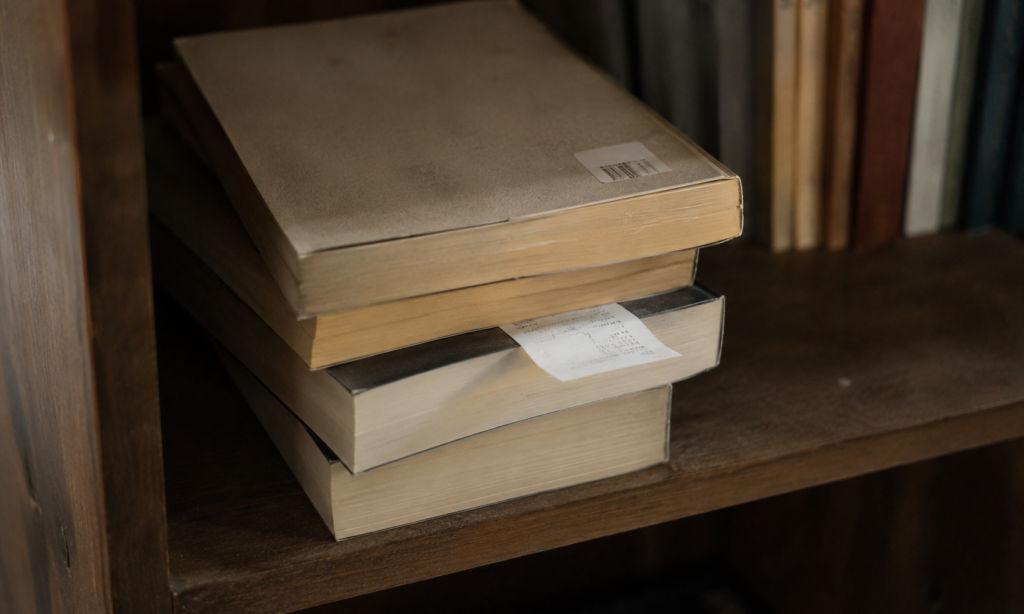
There’s a word for this. The Japanese call it tsundoku, buying books and letting them pile up unread. I didn’t know the term back then, but I recognized the feeling the moment I came across it. Buying a book felt like doing something about my reading life, even when I hadn’t opened one in weeks.
Looking back, the buying was a stand-in for the real thing. It let me feel like a reader without the harder part, which is actually sitting down and reading. I wanted the identity more than I wanted the habit, and a shelf full of spines was an easy way to fake it. That matches the research on habit formation: a study by Lally and colleagues at University College London found new behaviours took an average of 66 days to feel automatic, ranging from 18 days to well over 200.
That’s the part I had backwards. Reading more books was never going to come from owning more of them. It was going to come from treating the ones I already had like they mattered enough to open.
How to Read More Books Without Setting a Number Goal
Forty books sounds reasonable on paper. Break it down and it’s less than one book a week, which felt easy to imagine back in January. By March I was already checking the math in my head, working out how many pages a day I needed just to stay on pace.
That’s when reading stopped feeling like reading. I remember one night finishing a book I didn’t care about, just so I could mark it done and move to the next one. I skimmed the last forty pages, closed it, and felt nothing except relief that the count had gone up by one.
A goal like that turns every book into a task. You stop asking whether you’re enjoying it and start asking whether you’re behind schedule. I picked shorter books over ones I actually wanted to read, because a short book helped the number more than a long one I’d enjoy.
By December, I didn’t feel like someone who loved reading. I felt like someone who had failed a spreadsheet. That’s the real cost of a number goal, and it’s why the goal had to go before anything else could change.
Twenty Pages, No Phone: The Habit That Made Me Read More Books
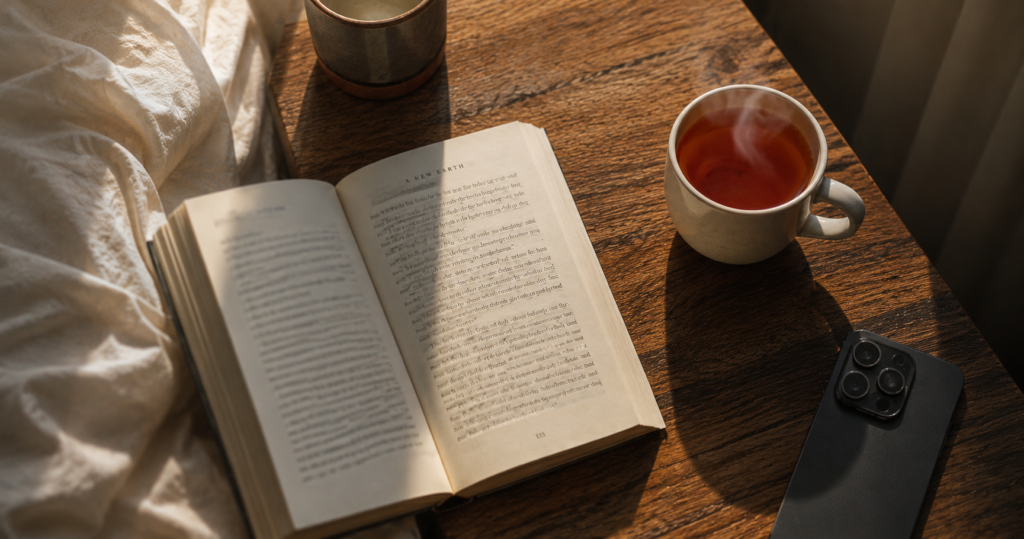
The one thing that actually stuck was absurdly small. Twenty pages, first thing in the morning, before I touched my phone. No app, no page tracker, just a rule I could follow half asleep with a cup of tea next to me.
Twenty pages takes about fifteen minutes. That’s short enough that I never talked myself out of it, even on mornings I didn’t feel like reading at all. Most days I kept going past the twenty, but the number itself was never really the point. It was just small enough to survive a bad morning.
The phone part mattered just as much as the page count. If I opened my phone first, the fifteen minutes disappeared into notifications and half-read headlines before I’d even noticed. Reading had to come before the scrolling, not after it, or it simply never happened at all.
This is the same logic behind the journaling habit that finally stuck for me. Shrink the ask until it’s too small to skip, then let it grow on its own. Twenty pages a day, kept up for a year, adds up to several books without ever feeling like work.
I Stopped Hiding My Books, and Started Reading More Books
My books used to live on a shelf in the hallway, which meant I saw them maybe twice a day, usually while walking past on my way to somewhere else. It’s a small thing, but out of sight really did mean out of mind. I’d forget I was even in the middle of a book some weeks.
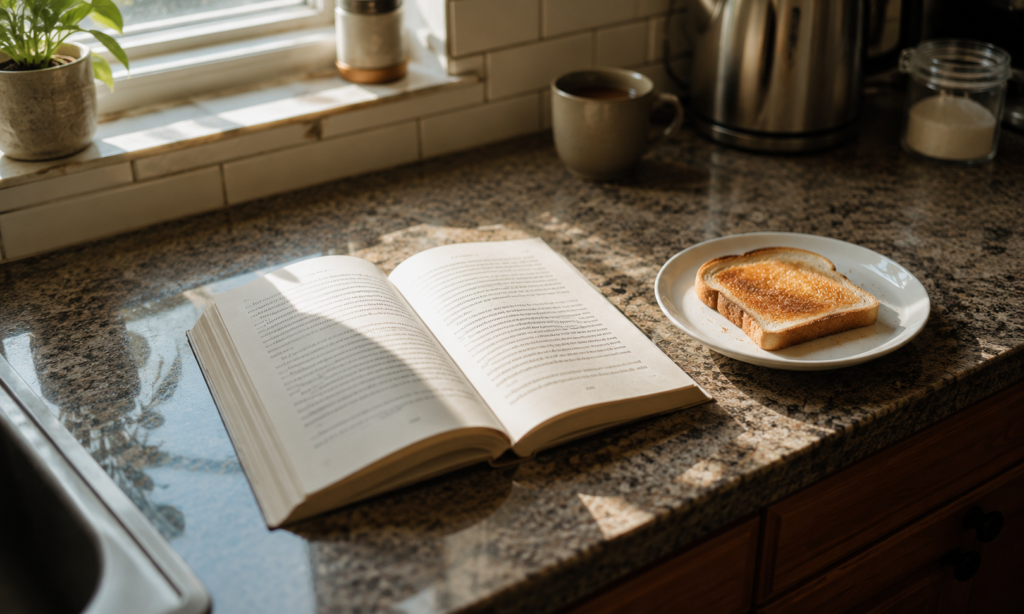
So I moved them. One book on my desk, one on the nightstand, one on the kitchen counter where I eat breakfast. Nothing dramatic, just books sitting in the same spots where my phone used to sit.
The difference showed up almost immediately. If a book is sitting right where my hand naturally goes, I pick it up without thinking about it. If it’s on a shelf across the room, picking it up requires a decision, and most days I won’t make that decision.
This isn’t really about willpower. It’s about which object is easiest to reach when you have five spare minutes. For years my phone won that fight by default, simply because it was always the closer one.
Permission to Quit: The Rule That Helped Me Read More Books
I used to finish every book I started, even the ones I hated by page fifty. Quitting felt like admitting defeat, like the problem was my attention span and not the book sitting in my hands. So I’d push through, resentfully, for another two hundred pages.
Last spring I picked up a novel everyone online seemed to love. I got sixty pages in and realized I hadn’t absorbed a single sentence in twenty minutes. My eyes were moving across the page while my mind was somewhere else entirely.
I closed it and started something else that same night. No guilt, no note in a journal about failing to finish it. It just wasn’t the right book for me at that moment, and there are too many good ones waiting to spend more time proving a point to nobody.
That single decision changed more than I expected. Once quitting was allowed, starting a new book stopped feeling risky. I could pick up something unfamiliar knowing I wasn’t locked in for three hundred pages if it didn’t work out.
A Year Later: What Reading More Books Actually Changed
I never counted this past year. No spreadsheet, no list taped inside a planner, no tally running in the back of my head. Somewhere around autumn I realized I couldn’t even tell you the exact number without going back through my notes. Looking back, the honest answer to how to read more books was never a technique. It was removing every small reason not to start.
When I finally counted for the sake of this post, it came to nineteen books. Nineteen, without trying, without a goal, without any of the pressure that made six books feel like failure two years ago. The math alone tells you something the spreadsheet never could.
What changed wasn’t my schedule or my free time. Those are roughly the same as they were during the year I finished six. What changed was that reading stopped competing with a number and started competing with my phone instead, and this time reading won more often than it lost.
I still have books I haven’t finished. I still buy more than I get to some months. But none of that bothers me anymore, because the goal was never really the forty books. It was becoming someone who reads, and that part actually worked.
How to Read More Books When You Genuinely Have No Time
The advice I resented most was “just wake up an hour earlier.” It assumes the problem is scheduling. For most people the problem is that reading competes with the one thing engineered to win: a phone that offers a reward every four seconds. You are not choosing between a book and free time. You are choosing between a book and something built by teams of people to be more immediately satisfying than a book.
Once I accepted that, the fix stopped being about willpower and started being about placement. Three changes did almost all the work, and none of them required more hours in the day.
Put the book where the phone lives
The phone wins because it is closer. It is in your pocket at the bus stop, in your hand on the sofa, on the pillow beside you. So I started leaving a book in each of those places. One by the bed, one in my bag, one on the arm of the sofa. Not three books I was reading at once, just the same book migrating to wherever I would otherwise reach for a screen. Reading more books turned out to be mostly a logistics problem.
Use the gaps, not the evenings
I had been saving reading for a long quiet evening that never arrived. Meanwhile I was losing twenty minutes a day to queues, waiting rooms, and the ten minutes before a meeting starts. Those gaps are useless for work and perfect for reading. Twenty minutes of found time a day is roughly a book a month, which is more than most people manage from willpower alone.
Let audiobooks count
I resisted audiobooks for a long time, as though listening were cheating. It is not. A commute, a walk, washing up, folding clothes, all of it is time your eyes are busy and your attention is not. Some books work badly in audio, dense non-fiction especially, and I still read those on paper. But for memoir, history and fiction, listening got me through books I would otherwise never have opened.
None of this makes you a faster reader. It just removes the assumption that reading requires a special protected hour, which is the belief that kept me buying books and never finishing them. If you want the underlying mechanics, I wrote about them in how to build a habit that actually sticks, and the same principle of removing friction shows up in what changed when I cut sugar.
One last thing worth saying, because it is the part people skip. Knowing how to read more books is not the same as reading better ones. Once the habit holds, the interesting question stops being how many and starts being which. That is a much better problem to have, and you only get to it after the mechanics stop fighting you.
How to Read More Books: The Short Version
If you want how to read more books reduced to something you could write on the back of a receipt, it is this. Stop setting a yearly number. Read twenty pages before the phone. Keep the book physically closer than the screen. Quit anything you are not enjoying by page fifty. Count audiobooks. That is the entire method, and none of it is clever.
What makes it work is not the rules themselves but the fact that each one removes a decision. Every time you have to decide whether to read, you are competing against something more immediately rewarding, and you will lose most nights. The rules above mean there is nothing to decide. The book is already there, the page count is already small, and permission to abandon it is already granted.
It took me about two months before an evening of reading stopped feeling like an achievement and started feeling like a default. That is roughly what the habit research would predict, and it is worth knowing in advance so that week three does not feel like failure. If you are still working out how to read more books six weeks in and it still takes effort, nothing has gone wrong. That is simply what week six looks like.
One final note on how to read more books. Track finished books, never pages or minutes, because pages reward grinding through something you dislike. A short list of books you actually finished tells you more about how to read more books than any streak counter ever will, and it stays honest on the weeks you read nothing at all.
Frequently Asked Questions About How to Read More Books
What is the five finger rule for books?
The five finger rule for books is a quick check for reading level. Read one page, hold up a finger for every word you don’t know. Five fingers means the book is too hard for now, zero or one means it’s too easy.
What is the three finger rule for reading?
The three finger rule for reading is a gentler version of the five finger rule, used for younger or less confident readers. Read a page and count the words that trip you up. Three fingers by the end means the book is a stretch.
Is reading 100 pages in two hours fast?
Reading 100 pages in two hours is close to an average pace, not fast. Most adults read 200 to 300 words a minute, and 100 pages usually takes 90 minutes to two and a half hours. Two hours sits right in the middle.
Do high IQ people read a lot?
High IQ people do tend to read a lot, and the two are genuinely linked. Stronger verbal intelligence makes reading easier and more enjoyable, so it happens more often. The habit and the intelligence end up reinforcing each other.
What does Elon Musk say about reading?
Elon Musk has said books were how he taught himself the basics of rocket science before starting SpaceX. He describes himself as a heavy reader as a kid, often finishing a book a day. His point: books are the fastest way to build real knowledge in an unfamiliar field.