
At a glance
Client: A WordPress plugin suite with 400,000+ active installs (name withheld under NDA)
My role: Funnel strategy, landing page copy, paid acquisition, tracking, ad creative
Timeline: 5 months
Headline result: $30,000 in new revenue
The product was not failing because it was bad. It had hundreds of thousands of active installs, a 4.8 star rating and a genuinely useful feature set. It was failing because nothing on the site was connected to anything else.
Pages existed. Traffic arrived. But no page had been built to move one specific person to one specific next step, and almost nothing was tracked closely enough to tell which parts were working. Profit was leaking out of a product that should have been growing.
The problem, stated plainly
When I audited the setup, three things stood out.
- Every page was written for everyone. Cold visitors and ready-to-buy visitors saw the same message, which meant it was too shallow for one and too much for the other.
- There was no path between pages. Someone who read a feature page had nowhere obvious to go next, so they left.
- Tracking was thin enough that most decisions were guesses. Nobody could say which page or campaign was producing revenue.
The bottleneck was never traffic or product quality. It was that no one had decided what each page was supposed to do.
What I built
Rather than optimise pages one at a time, I built a funnel: four landing pages, each with a single job, matched to how much the visitor already knew.
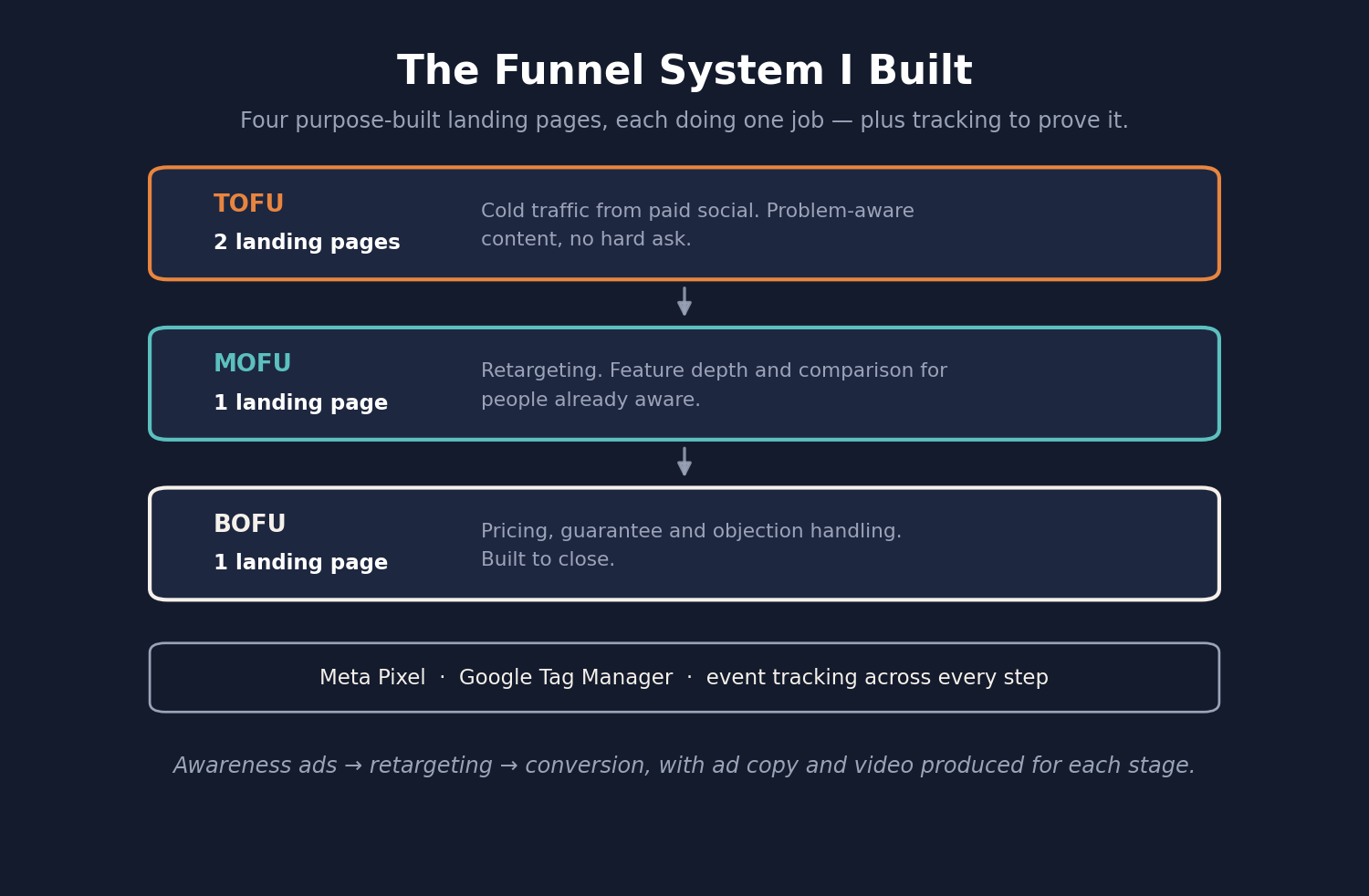
Two top of funnel pages
These took cold paid social traffic. The job was narrow: make a stranger problem aware and solution aware, then earn a small next step. No pricing, no pressure, a concrete promise and proof up front.
One middle of funnel page
This one served retargeted visitors. People arriving here had already decided the category was worth their attention and were now comparing options, so the page went deep on capability and direct comparison instead of repeating the basics.
One bottom of funnel page
Built to close. Pricing structure, a 14 day money back guarantee and direct handling of the objections that actually stop a purchase. At this stage price is rarely the real hesitation. Regret is.
The psychology behind each page
Every page was written against one level of awareness, which is the part most landing page work skips.
- Unaware and problem aware traffic needs a specific, concrete promise plus fast credibility. Install counts and ratings did that work.
- Solution aware traffic needs differentiation. This is where feature depth and comparison earn their place, not before.
- Most aware traffic needs risk removed. The guarantee did more for conversion here than any additional feature argument would have.
Making it measurable
None of the above is worth much if you cannot see it working. I set up Meta Pixel and Google Tag Manager across the whole path, with events on each meaningful step, so every stage of the funnel had data behind it rather than an opinion.
That changed the conversation internally. Instead of debating which page felt better, we could see where people dropped and fix that specific thing.
Acquisition and retargeting
I ran awareness campaigns into the top of the funnel, then retargeted engaged visitors down through the middle and bottom pages. I wrote the ad copy and produced the promo and feature videos the campaigns ran on, so the message stayed consistent from ad to page.
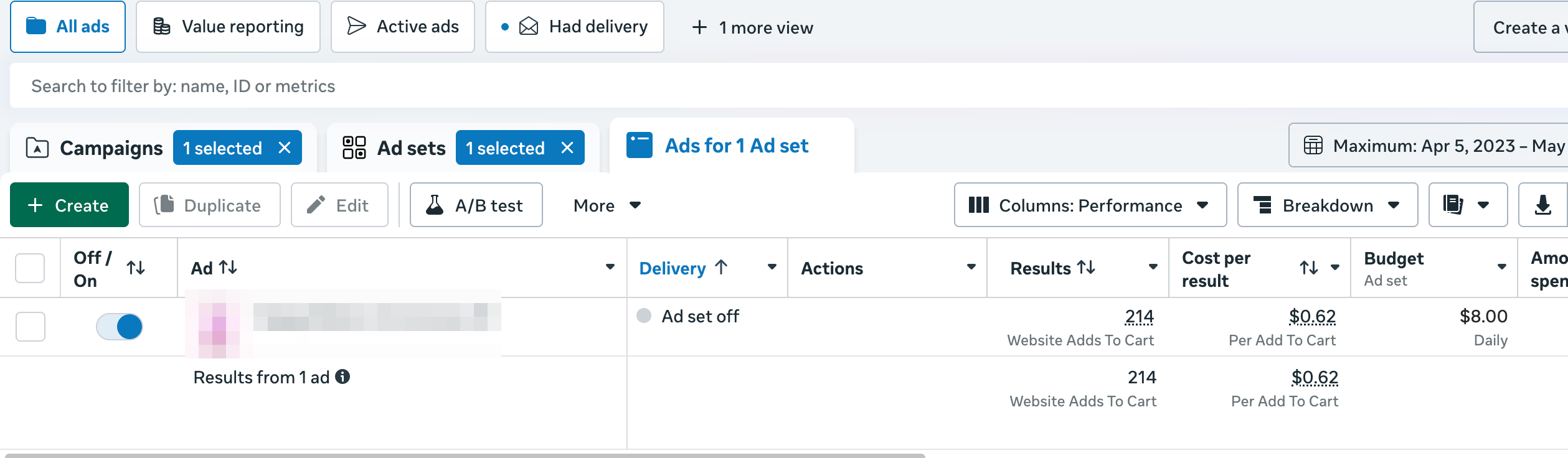
The retargeting layer is where the funnel earned its keep. Cold traffic rarely buys on first contact for a product like this. The second and third touch is where the revenue actually appeared.
Results
$30,000
in new revenue over 5 months
4
purpose built landing pages
$0.62
cost per add to cart on retargeting
Same product. Same market. Same audience. The difference was a system that took someone from never having heard of the product to buying it, with each step doing one job and every step measured.
What I would carry into your product
- Audit which stage of awareness each existing page actually serves, then find the gap. There is almost always a missing middle.
- Build tracking before building more pages. Untracked pages generate opinions, not decisions.
- Treat retargeting as part of the funnel design, not as an afterthought bolted on at the end.
- Put risk reversal on the closing page and give it real estate. It usually outperforms another feature block.
What the people I worked with say
“Arif has been a promising digital marketer for years. He is highly skilled in creating and executing sales funnels and consistently delivers results. He is a quick learner who adapts to challenges effectively. From SEO to content creation, he has strong knowledge in both areas and applies it strategically to drive growth.”
Raad Sheraz
Sr. Digital Marketing Strategist at weDevs
Managed Arif directly
Recognise any of this in your own product?
If you have traffic but no system connecting it to revenue, that is the exact problem this work solved. Tell me what you are building and I will tell you honestly whether I can help.